
You Met the World at a Very Chinese Time
Melissa da Costa"You met me at a very Chinese time in my life."
If you've been online at all in the past year, you've seen this phrase. It shows up under a video of someone sipping hot water from a thermos. Under a photo of a perfectly folded xiaolongbao. Under a guy in a Tangzhuang-style Adidas jacket, staring into the middle distance like he's in a perfume ad.
The line is a Fight Club parody — a riff on the film's closing line, "You met me at a very strange time in my life." It's absurd. It's extremely online. And it's also, quietly, kind of true — for almost everyone, whether they've noticed or not.
Because this isn't really about people "becoming Chinese." It's about the fact that Chinese products, platforms, and innovations are already woven so deeply into everyday life around the world that it took a meme to make us actually look down and notice.
So let's look down.
How Chinese Is Your Tuesday Morning?
Take a quick inventory of your day so far.
The phone in your hand? Assembled in China — and the rare earth minerals inside it were almost certainly processed there too. The battery in your wireless earbuds? Chinese supply chain. The TikTok you scrolled through at breakfast? Chinese-owned app. The Shein package sitting by your front door? The Temu ad you swiped past? The fast-fashion haul your coworker won't stop talking about?
For decades, China was described as "the world's factory" — a place where Western designs got assembled at scale. That framing is outdated now. China doesn't just build things for other people's brands anymore. It designs, patents, and ships its own. BYD, a company most people outside Asia hadn't heard of five years ago, outsold Tesla globally. Xiaomi makes phones, electric cars, and smart home gadgets that compete with (and sometimes embarrass) legacy brands.
The "Made in China" era has quietly become the "Designed and Developed in China" era. And most of us are already customers.
The Stuff That Makes People Say "Wait, They Have THAT?"
Half of Chinamaxxing content is just people discovering Chinese technology and going through the five stages of grief about their own country's infrastructure.
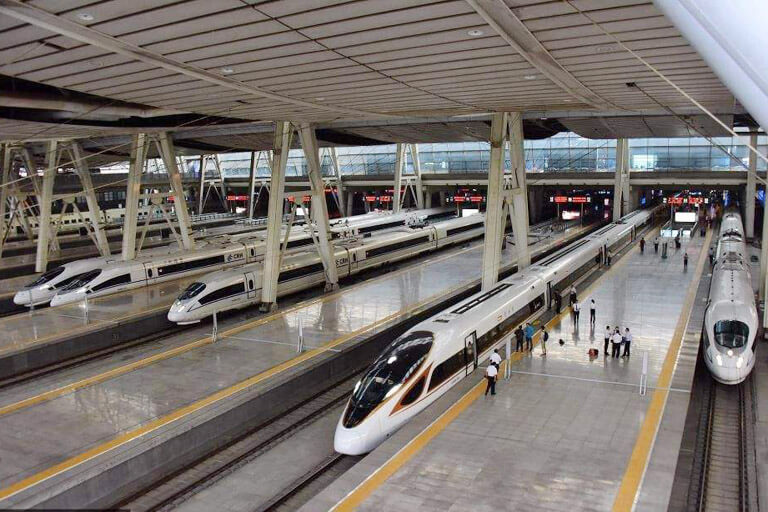
China built the world's largest high-speed rail network in just over a decade. You can cross the country at 300 km/h, on time, in a clean train — and it costs less than a budget airline ticket in most Western countries. The "why can't we have this?" energy is real.
Then there's the digital ecosystem. WeChat isn't just a messaging app — it's a messaging app, a payment system, a ride-hailing service, a banking portal, and a food ordering platform all rolled into one. Imagine if WhatsApp, SnapScan, Bolt, and Mr D Food had a baby and that baby actually worked smoothly. That's the daily reality for over a billion people.
And when DeepSeek dropped an open-source AI model that rivalled offerings from the biggest Western labs, the tech world's reaction was basically a collective "...oh." Not surprise that China could innovate. Surprise that the conversation had shifted so fast.
The question hasn't been "can China innovate?" for a while now. The more interesting question is: what happens when the rest of the world has to adapt to innovation that starts there?
The Greenest Irony
Here's a fun cognitive dissonance exercise.
China is the country that gets lectured most about coal consumption at every international climate summit. China is also the country manufacturing the solar panels on your roof, the lithium-ion battery in your electric car, and the EV that costs half the price of the one your neighbour just bought.
The numbers are staggering. China produces the vast majority of the world's solar panels. It dominates the global supply chain for EV batteries. BYD alone sells more electric vehicles than most countries produce in total. The massive solar mega-farms in places like Tibet and the Gobi Desert — sprawling across hundreds of thousands of acres — look like something from a science fiction film.

Critics point to the coal. Fair. But the broader picture is a country that is simultaneously the largest investor in renewable energy infrastructure on Earth. For most nations trying to hit climate targets with affordable clean technology, Chinese suppliers aren't one option among many — they're the option.
In other words: the global fight against climate change? It's having a very Chinese time in its life.
Your "Very Chinese Moment" Is Probably Cultural Too
This is where the meme really lives.
Labubu — that mischievous, slightly unhinged-looking Pop Mart doll — became a global sensation. People queue for hours. Resale prices are absurd. Celebrities post unboxings. A toy designed by a Hong Kong artist and manufactured by a Chinese company became one of the most coveted collectibles in the world, and nobody blinked.
Mixue Ice Cream & Tea, a Chinese chain that most Westerners had never heard of two years ago, quietly became one of the largest beverage chains on the planet and opened its first US location. Luckin Coffee overtook Starbucks in China and is expanding outward. These aren't niche brands — they're juggernauts moving at a speed that legacy chains can't match.
Remember when TikTok was about to be banned in the US and millions of Americans migrated to Xiaohongshu (RedNote) overnight? That wasn't a political statement. It was people instinctively moving to the next Chinese-built platform because the last one had already become essential to their daily life.
And then there's creator Sherry Zhu, whose tongue-in-cheek videos instructing viewers on how to "become Chinese" racked up over 20 million views. "Tomorrow, you're turning Chinese," she deadpanned. "Resisting it now is pointless." Jimmy O. Yang posted his own version. The Adidas Tangzhuang jacket went from meme prop to actual fashion item.
This isn't the 20th century model of cultural export — no single blockbuster film or pop song conquering the globe. It's more networked, more platform-native, and often more playful. But it's everywhere.
You Met the World at a Very Chinese Time in Its Life
None of this means China is about to "win" the century in some simple, unchallenged way. The US is still a superpower. Europe still sets global regulatory standards. India is rising fast. The world is messier and more multipolar than a single narrative can capture.
But the point the meme accidentally makes — better than any policy paper or TED talk ever could — is that China is no longer a background player in anyone's life. It's in the phone, the battery, the solar panel, the app, the algorithm, the toy your kid is obsessed with, and the iced tea you grabbed on the way to work.
We didn't "enter" a Chinese era in some dramatic geopolitical moment. We scrolled into it. We ordered it with free shipping. We downloaded it. We ate it with chilli oil.
And honestly? That last part might be the best place to start. You don't need to book a flight to Shanghai to have your "very Chinese moment." You just need a proper bottle of Lao Gan Ma chilli crisp, a bowl of ramen that actually hits, a jasmine tea that makes you wonder why you ever drank anything else, and maybe a handcrafted bowl that makes the whole ritual feel right.
That's kind of what we do at HelloAsia! — we bring the flavours, the pantry staples, the kitchenware, and the little daily luxuries of Asian culture to your door, anywhere in South Africa. No passport required. Just a curiosity about why a billion people swear by hot water, chilli oil on everything, and tea that actually tastes like tea.
So the next time you crack open a pack of shrimp chips at 11 p.m., or find yourself arranging your noodle toppings like you're plating for a C-drama screenshot — just know:
You met the world at a very Chinese time in its life. And it tastes incredible.